Oral Cancer Screening
Detect oral cancer early with simple screenings that safeguard long-term health and wellness.
Book ConsultationAn oral cancer screening is a quick, painless examination where the dentist checks for early signs of cancer in the mouth, lips, and throat. Early detection of abnormalities greatly improves treatment success and helps protect long-term overall health.
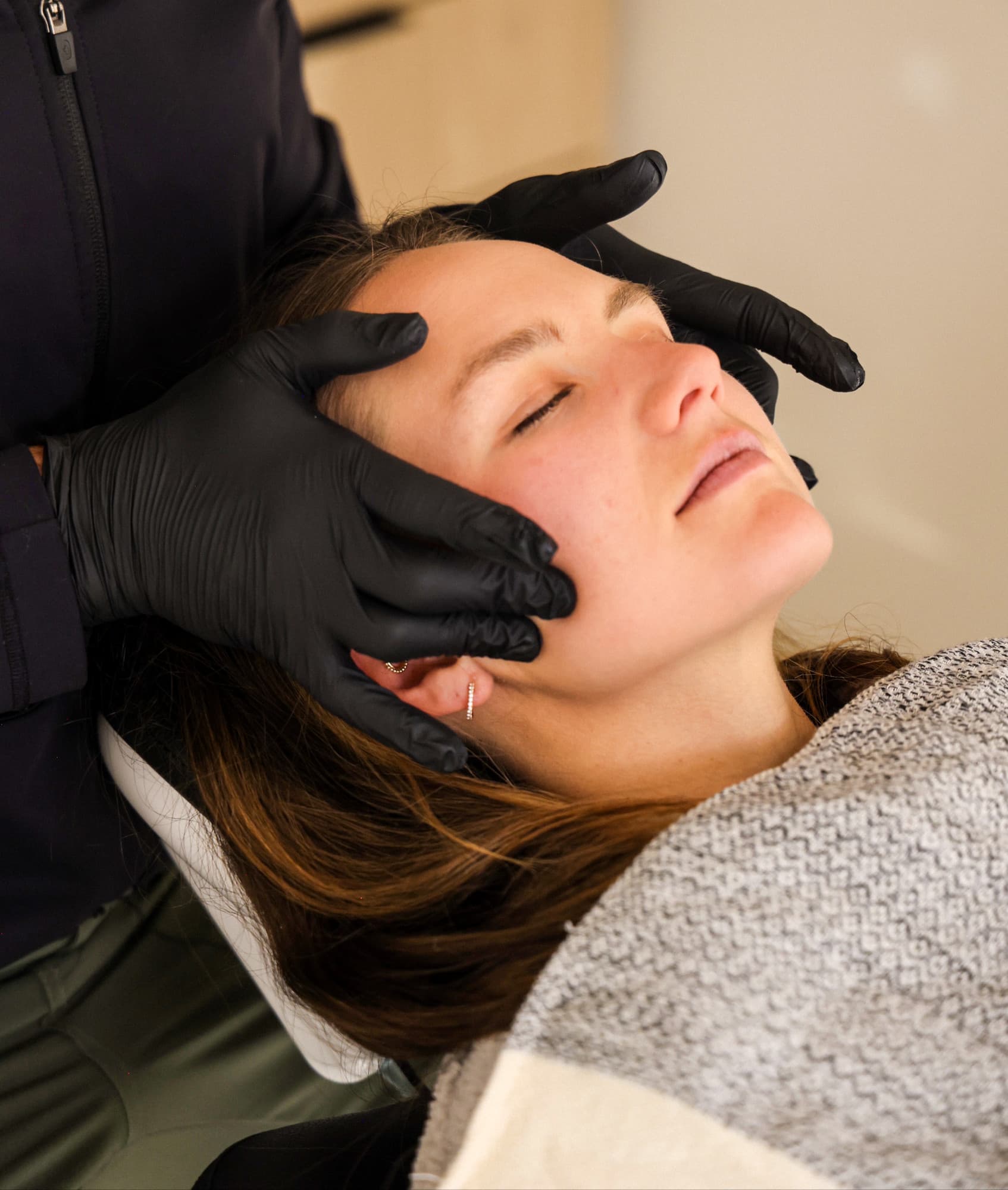
Oral cancer screening involves a visual and physical exam of your mouth, lips, tongue, and throat. Using advanced tools, dentists detect early signs of cancer or precancerous changes, helping protect health through early intervention.
Oral cancer screening detects early signs of cancer in the mouth, lips, and throat. Early detection improves treatment success and saves lives. Screenings are quick, painless, and an important part of preventive dental care for long-term health.
Frequently Asked Questions
An oral cancer screening is a quick visual and hands-on exam, usually done during your regular dental checkup. The dentist looks at your lips, gums, cheeks, the top, sides and underside of your tongue, the floor and roof of your mouth, and your throat for sores, patches or lumps. They then gently feel your jaw and neck for swelling or enlarged lymph nodes. It takes only a few minutes, is noninvasive and needs no preparation beyond removing dentures.
For most adults, an oral cancer screening at least once a year, typically as part of a routine dental checkup, is a sensible schedule. If you use tobacco, drink alcohol heavily, have had oral cancer before or have other risk factors, your dentist may recommend checking more often. Between visits, watch for changes in your mouth and call SoCal Prime Dentistry at (949) 713-1606 if a sore, patch or lump lasts longer than two weeks.
Early signs of oral cancer include a mouth sore that doesn't heal within two weeks, red or white patches, a lump or thickening in the cheek, tongue or neck, and persistent hoarseness or sore throat. Others are trouble chewing or swallowing, numbness in the tongue or lips, and ear pain on one side. Many of these have harmless causes, but any change that lasts more than two weeks should be examined. Early changes often cause no pain, so routine screening matters.
Your risk of oral cancer is higher if you use tobacco in any form or drink alcohol heavily, and especially if you do both. HPV infection is linked to cancers of the throat and back of the tongue, and long-term sun exposure raises the risk of lip cancer. Risk also increases with age and is higher in men. That said, oral cancer can develop in people with no known risk factors, which is why screening is recommended for all adults.
A suspicious finding does not mean you have cancer; many spots turn out to be harmless irritation or infection. Often the first step is to recheck the area in about two weeks to see whether it heals. If it persists or looks concerning, the next step is usually a biopsy, which is the only way to confirm a diagnosis. Dr. Sharma will explain what was found and your next steps clearly, and catching changes early gives you more treatment options.