

Bone Grafting
Strengthen your jaw with bone grafting, creating a stable foundation for dental implants.
Book ConsultationBone grafting is a surgical procedure that rebuilds or strengthens the jawbone using graft material, making it possible to place dental implants securely, restore facial structure, and prevent bone loss caused by missing teeth or advanced periodontal disease.
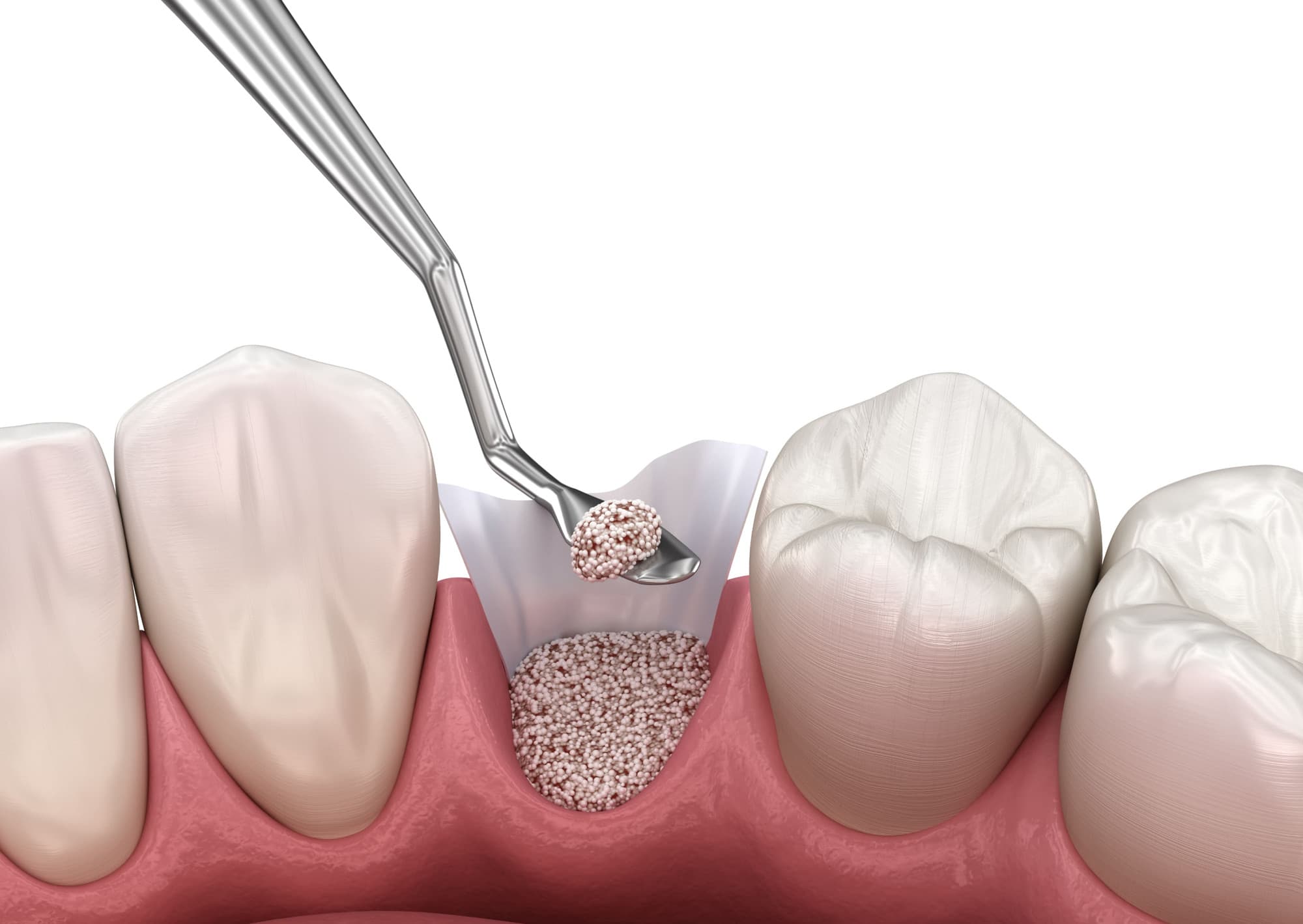
Bone grafting rebuilds lost jawbone by placing natural or synthetic bone material into areas of deficiency. Over time, the graft integrates with existing bone, creating a strong foundation for dental implants or other restorative procedures.
Bone grafting rebuilds jawbone structure lost from decay, trauma, or tooth loss. By restoring bone density, it supports dental implants and strengthens overall oral health. This procedure helps ensure long-term stability, function, and confidence in your smile.
Frequently Asked Questions
You may need a bone graft if your jawbone has become too thin or too short to hold a dental implant securely. After a tooth is lost, the bone that supported it gradually shrinks, and advanced gum disease, infection or injury can cause further loss. Dr. Sharma uses digital imaging to measure the bone at the implant site. If there isn't enough, a graft rebuilds the area so the implant has a stable foundation and your gums and facial contours stay supported.
Most people feel pressure rather than pain during a dental bone graft, because the area is fully numbed first. If you feel anxious, laughing gas, oral sedation or IV sedation can help you stay relaxed. Afterward, mild soreness, swelling or bruising for a few days is normal and usually responds to over-the-counter pain relievers and cold compresses as directed. Pain that worsens after the third day, a bad taste or a fever should be reported to the office promptly.
Most bone grafts need several months to heal and integrate before an implant can be placed, though the timeline varies from person to person. Small grafts may be ready sooner, and in some cases a minor graft can be placed during the same visit as the implant. Larger grafts that rebuild significant height or width generally take longer. Your dentist checks healing with follow-up visits and imaging, and places the implant once the new bone is firm enough to hold it.
Dental bone graft material can come from your own body, a human donor, an animal source, or it can be fully synthetic. Donor and bovine materials are processed and sterilized for safety and are widely used, while synthetic options are made from biocompatible minerals. Each one acts as a scaffold that your own bone gradually grows into and replaces. Your dentist recommends a material based on the size and location of the defect and your health history, and explains the options beforehand.
The cost of a bone graft depends on the type and amount of graft material, the size of the area being rebuilt, whether sedation is used, and whether it's combined with an extraction or implant. Some dental plans cover part of grafting, especially when it's tied to a covered procedure. SoCal Prime Dentistry checks your insurance benefits and gives you a written estimate before treatment. Financing through CareCredit or Sunbit and an in-house membership plan can help spread out costs.